
- This event has passed.
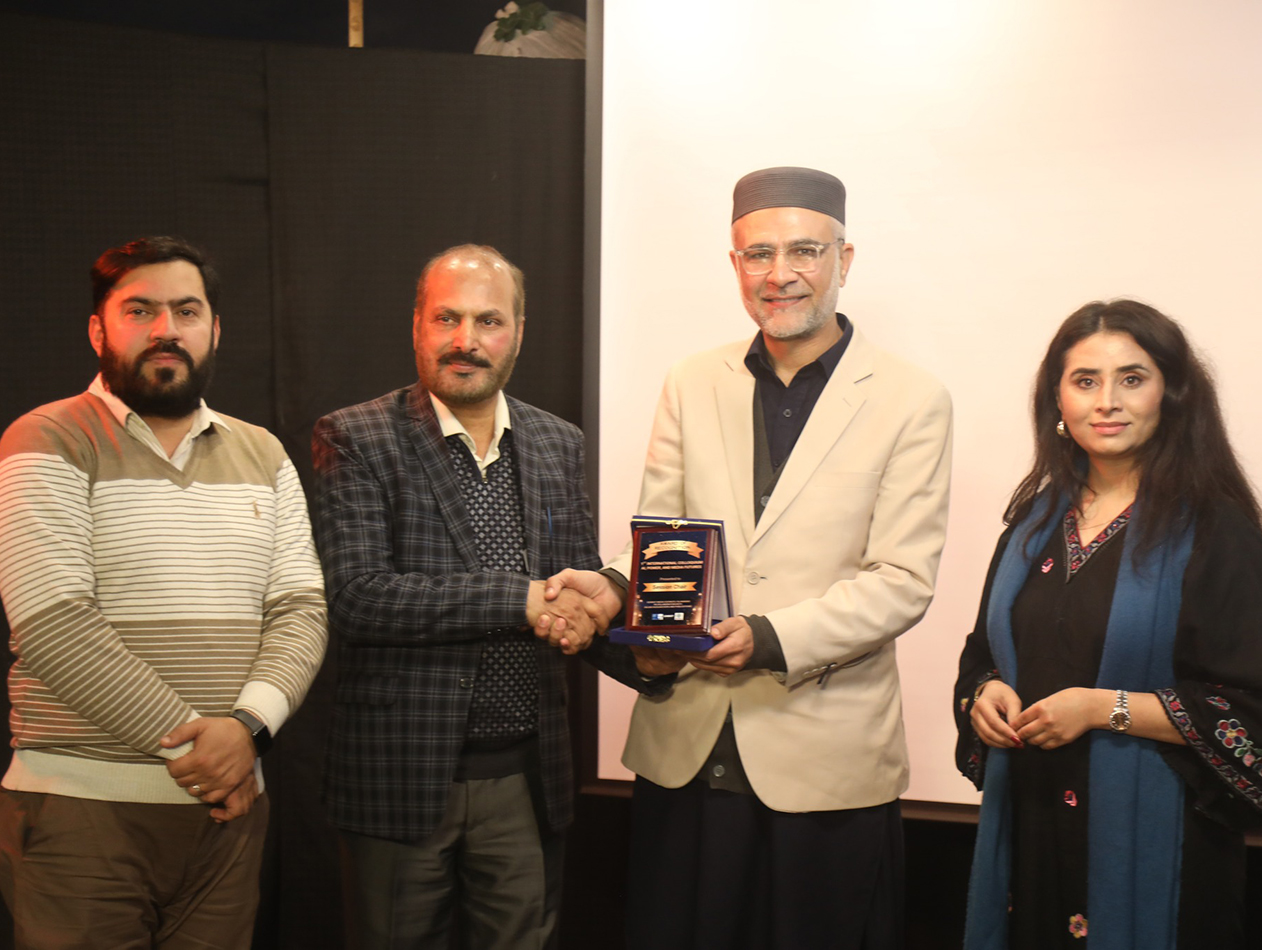
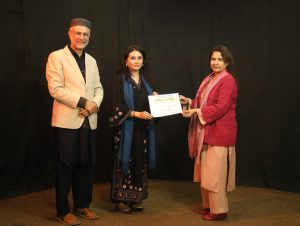
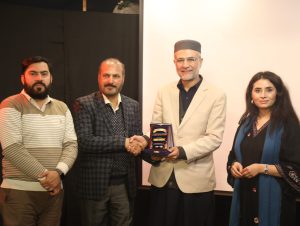
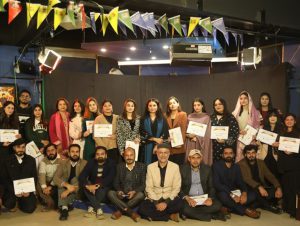
The Faculty of Media Sciences at SZABIST University Islamabad successfully hosted its First International Colloquium on Sunday, January 04, 2026, bringing together scholars, researchers, and academics to promote knowledge exchange and research-driven academic dialogue.
The colloquium featured a distinguished lineup of national and international keynote speakers, whose thought-provoking insights shaped the academic vision and intellectual depth of the event. Dr. Aamir Jamal, Associate Professor at the Faculty of Social Work, University of Calgary, Canada, shared critical perspectives on the evolving role of universities in the age of Artificial Intelligence.
Renowned academic Prof. Dr. Taimur Ul Hassan highlighted the importance of gatekeeping and the political economy of AI, while international speaker Noprita Herari discussed artificial intelligence and its expanding influence on algorithmic life. A leading academic voice, Dr. Sarah Umer, emphasized the dual role of AI in media and social change, highlighting both its opportunities and challenges.
In the concluding remarks, Prof. Dr. Kamran Azam appreciated the presenters for their valuable research contributions and scholarly publications, acknowledging the significance of their work in advancing contemporary academic discourse. Researchers and presenters shared original studies and peer-reviewed research, contributing meaningful perspectives on AI, media, and society.
The session was guided with academic rigor by Dr. Ali Rana, Head of the Department of Communication and Media Studies at Fatima Jinnah Women University, who served as Session Chair, ensuring scholarly depth and structured discussion. Professor Dr. Muhammad Riaz, Professor of Media Studies, also served as Session Chair, facilitating rigorous engagement and critical dialogue throughout the sessions.
The successful organization of the First International Colloquium reflects SZABIST’s commitment to academic excellence, global collaboration, and research-led discourse in emerging areas of media, artificial intelligence, and social transformation.