
- This event has passed.
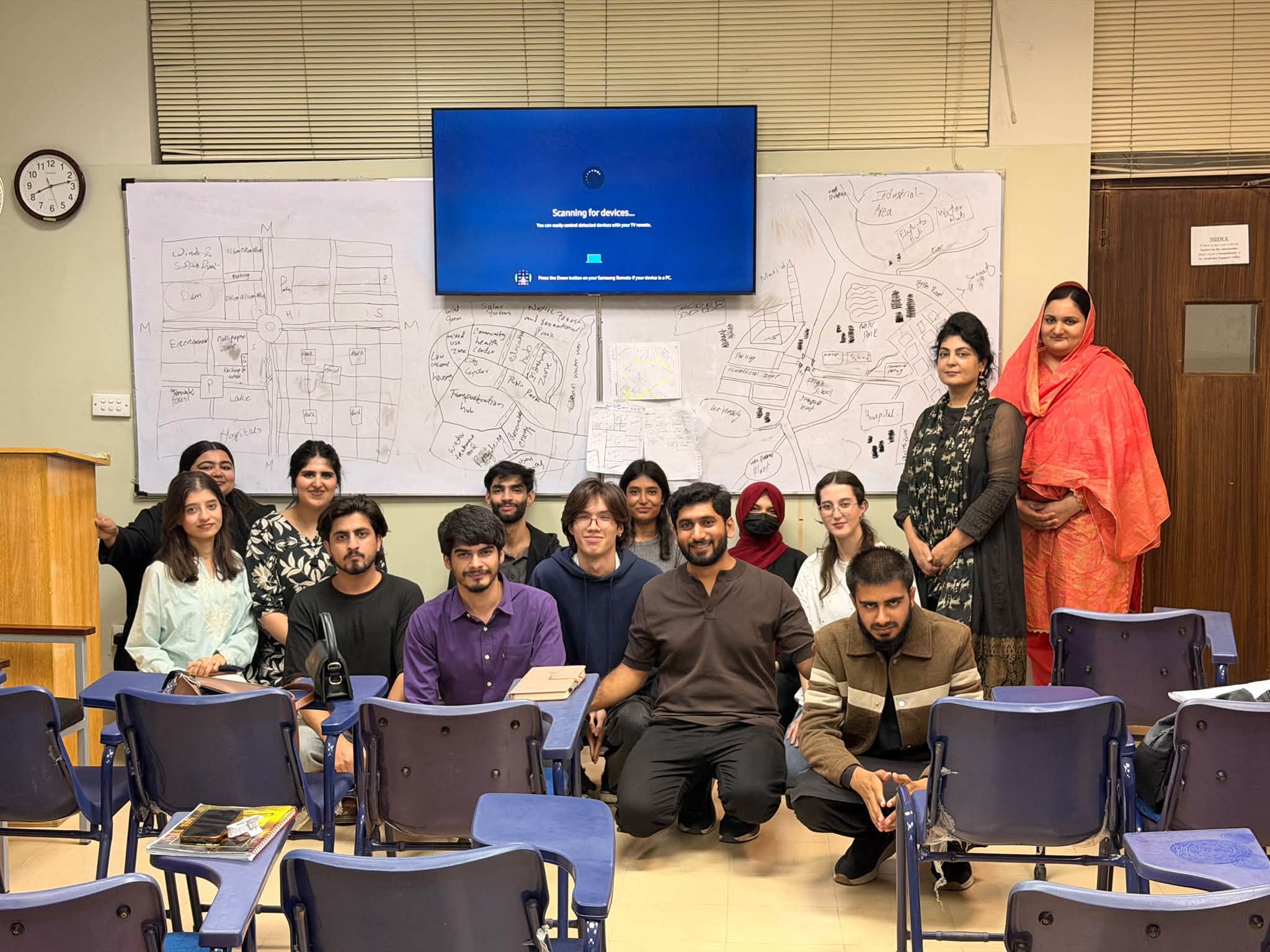
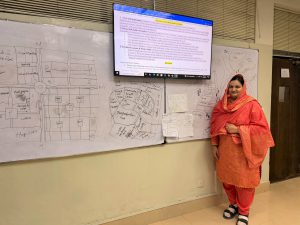
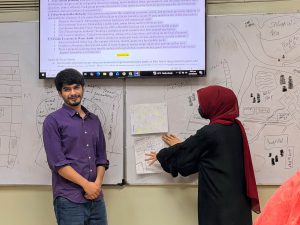
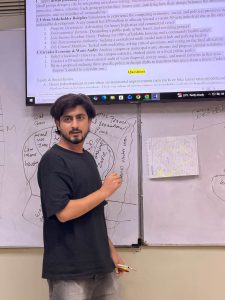
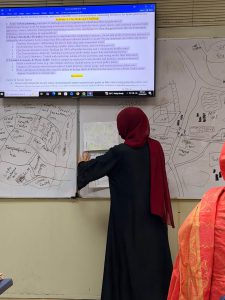
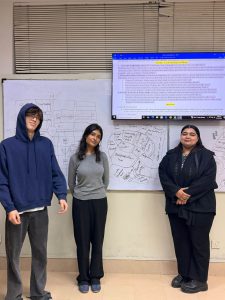
Islamabad: The Department of Social Sciences at SZABIST University Islamabad Campus organized a hands-on Urban Planning Classroom Activity for Development Studies students under the theme “Reimagining the Future: Sustainable Cities of Tomorrow.” The activity encouraged students to explore how cities can become economically viable, socially equitable, environmentally resilient, and climate-smart.
As part of the exercise, students designed and presented models of sustainable cities, applying development theories and policy concepts to address real-world urban challenges. Their projects explored issues such as informal settlements, transit-oriented development, green infrastructure, and the integration of renewable energy systems.
The interactive activity focused on three key dimensions of sustainable urban development:
-
Environmental Resilience and Climate Adaptation: Students explored low-emission transportation networks, waste-to-energy systems, and urban green belts to reduce environmental pressures and address climate-related risks.
-
Social Inclusion and Spatial Justice: The models addressed housing affordability, spatial segregation, and accessible public spaces, highlighting the importance of inclusive urban development.
-
Resource Governance and Infrastructure: Students examined sustainable approaches to managing growing urban populations through efficient water, sanitation, and energy distribution systems.
The exercise enabled students to connect theoretical knowledge with practical spatial and policy design. It also encouraged critical thinking, problem-solving, and an understanding of the interconnected challenges associated with rapid urbanization.
Through such experiential learning initiatives, SZABIST University Islamabad continues to promote practical and interdisciplinary education, encouraging students to develop innovative approaches to development challenges and contribute towards more sustainable communities.